53 source entries and 120 evidence points, compiled 19 October 2026. This is an index of sources, not a new systematic review, and a listing is not an endorsement.
Key statistics, in exact wording
44%
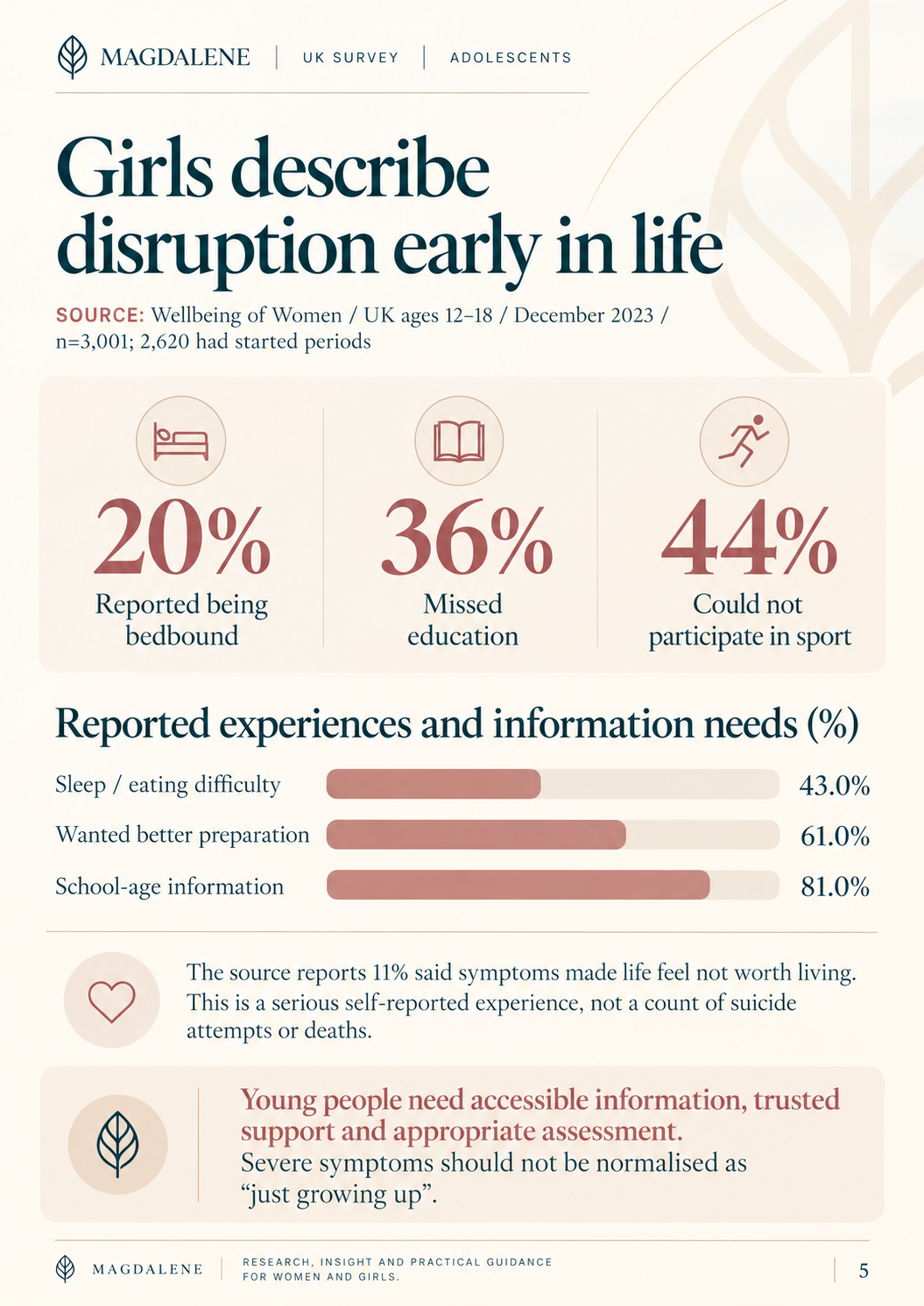
Of UK girls aged 12–18 who had started periods, 44% in the Wellbeing of Women December 2023 survey reported being unable to participate in sport/physical activity due to period symptoms. Surveyed: 3,001 girls; 2,620 had started periods. Does not mean 44% of all adult women miss sport or permanently quit.
83%
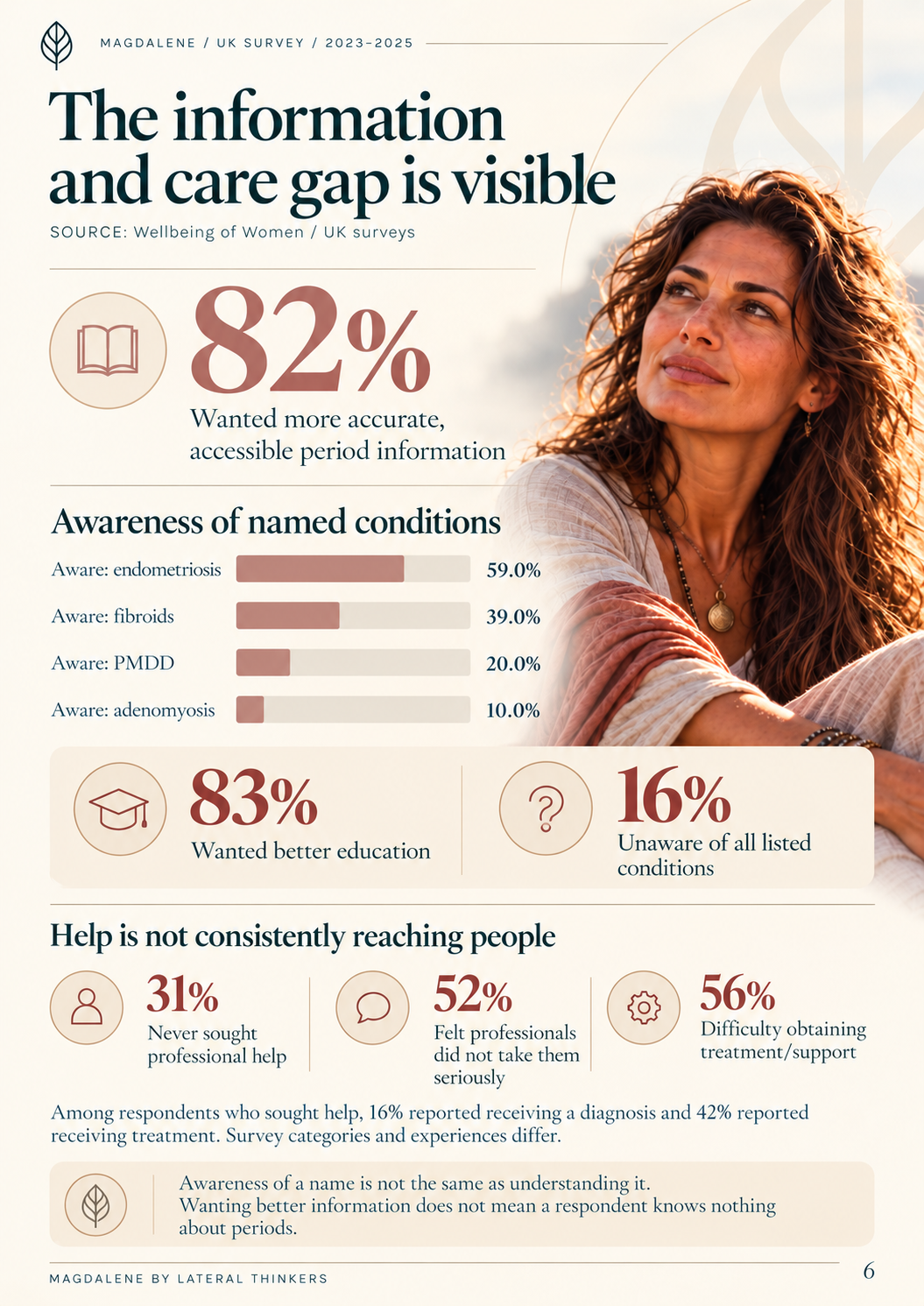
In a UK August 2023 survey of 3,002 women and girls aged 16–40, 83% agreed that better period education is needed in school, college and university. A separate 83% response concerned accessible information about gynaecological conditions.
82%
Same August 2023 survey: 82% agreed that more accurate, accessible information on periods is needed.
51%
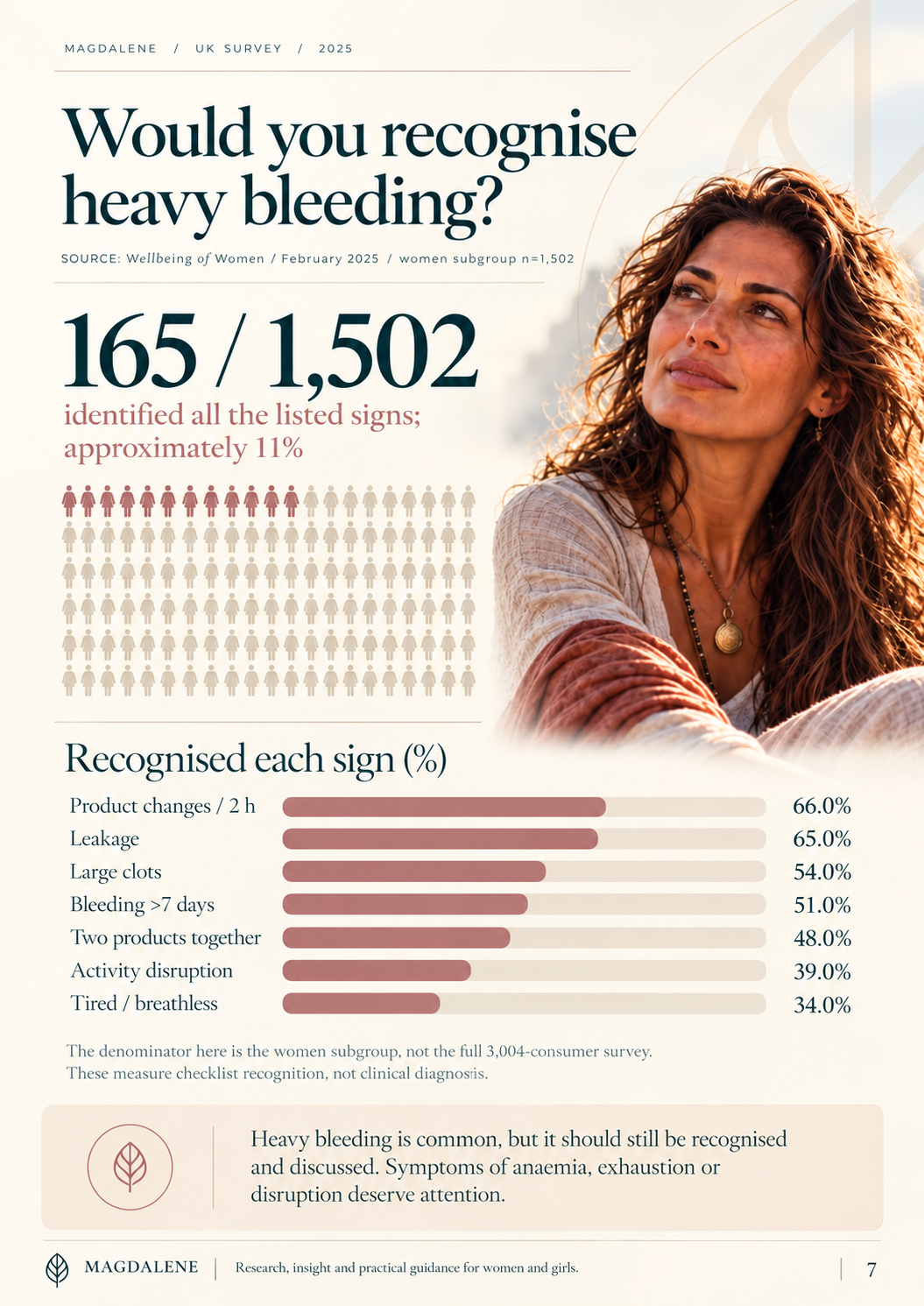
In a separate February 2025 UK consumer survey, 51% of surveyed women said they avoid exercise while on their period. Do not merge with 2023 girls survey.
36%, 20%, 11%
In the 2023 girls survey, 36% missed school/education, 20% said bedbound, 11% said symptoms made life feel not worth living. The last is a self-report, not a suicide count.
18.7% / 40.0%
Palmer et al., England cross-sectional online sample: severe period pain 18.7%; heavy bleeding 40.0% in past year. Ages 16-55; n=59,332 total, outcomes vary by response.
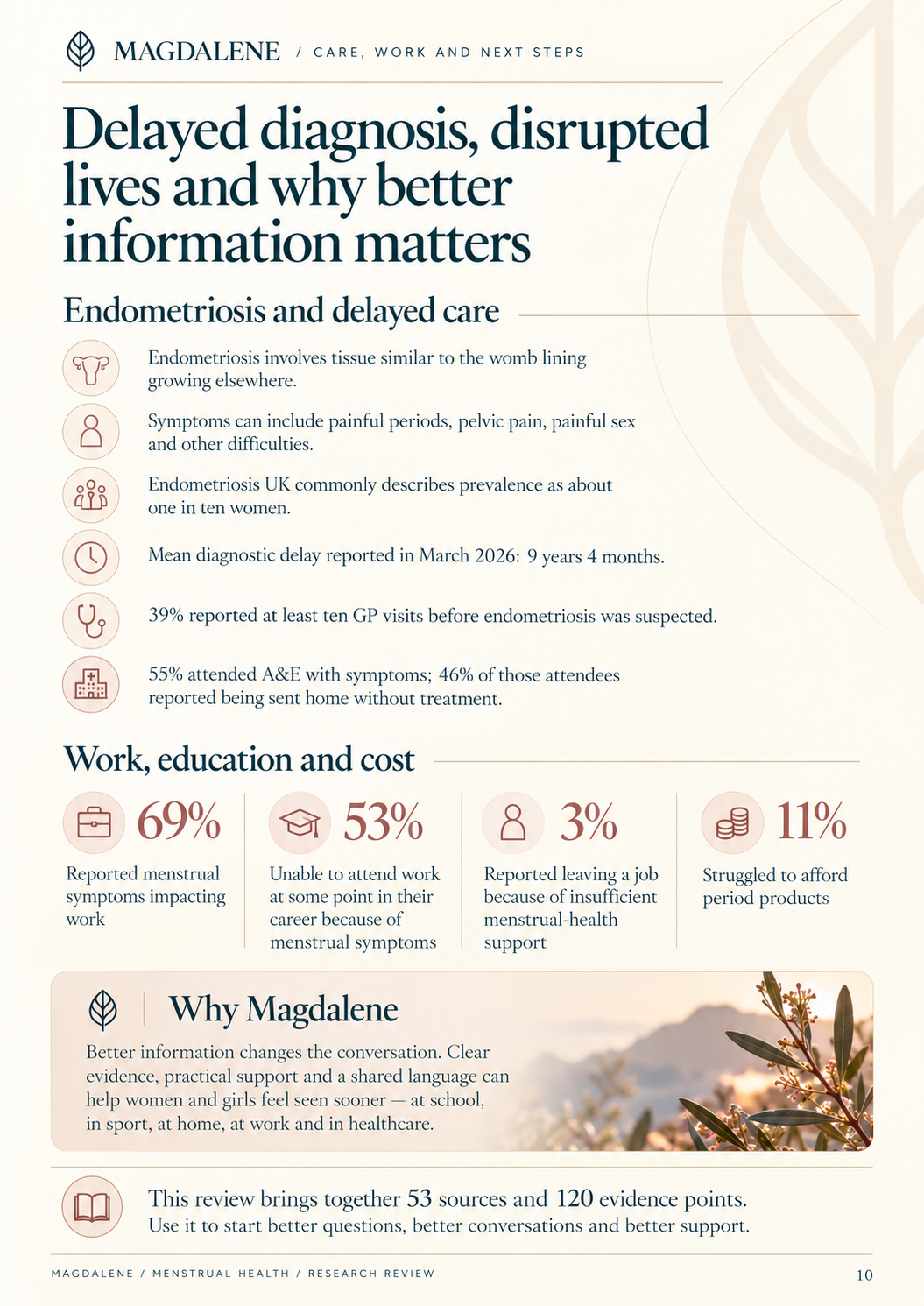
9 years 4 months
Endometriosis UK March 2026 charity-survey average reported time to diagnosis; not an NHS administrative national average.
69%
CIPD 2023 UK workplace survey: 69% of symptomatic respondents said menstrual symptoms negatively affected work; not annual absence rate.
Menstrual Health Research Review
Pages from the review. Tap a page to open it full size.
All sources
Clinical / professional guidance
[01]NHS. Water, drinks and hydration. Practical fluid guidance.Open source
[07]Drinking Water Inspectorate. Chlorine; domestic water filters and softeners. Disinfection and maintenance guidance.Open source
[10]NHS. Antacids. Ingredients, cautions and interactions.Open source
[12]World Cancer Research Fund. Wholegrains, vegetables, fruit and beans; evidence supporting cancer-prevention recommendations.Open source
[18]NHS. Periods and fertility in the menstrual cycle.Open source
[19]NHS. Period problems: care and treatment options.Open source
[24]NHS. Periods. Typical timing and duration.Open source
[25]NHS. Period pain. Self-care, causes, treatment and urgent advice.Open source
[26]NHS. Heavy periods. Symptoms, investigation and treatments.Open source
[27]NHS. Iron deficiency anaemia. Symptoms, causes and treatment.Open source
[28]NHS. Endometriosis. Symptoms and care options.Open source
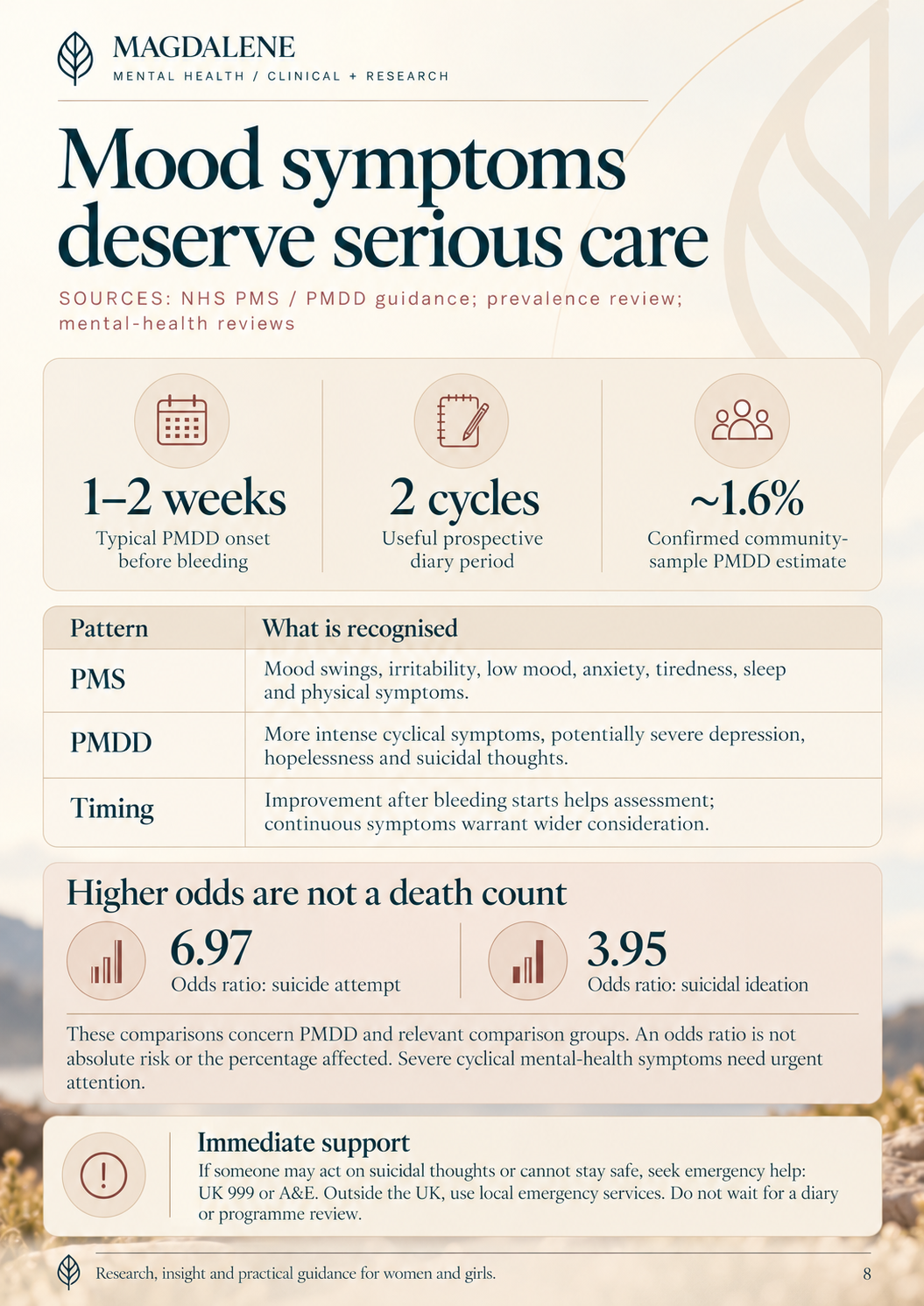
[29]NHS. PMS and PMDD. Symptoms and treatment.Open source
[30]NHS. Postmenopausal bleeding. Assessment even after a single episode.Open source
[31]NHS. Pelvic pain. Urgent and emergency advice.Open source
[35]NHS. PMDD: symptoms, timing and treatment.Open source
[36]NHS. PMS: symptoms, treatment and evidence limits.Open source
[53]NHS. Breathing exercises for stress.Open source
Peer-reviewed study / review
[02]Wittbrodt MT, Millard-Stafford M (2018). Dehydration Impairs Cognitive Performance: A Meta-analysis. Med Sci Sports Exerc 50:2360-2368. DOI: 10.1249/MSS.0000000000001682.Open source
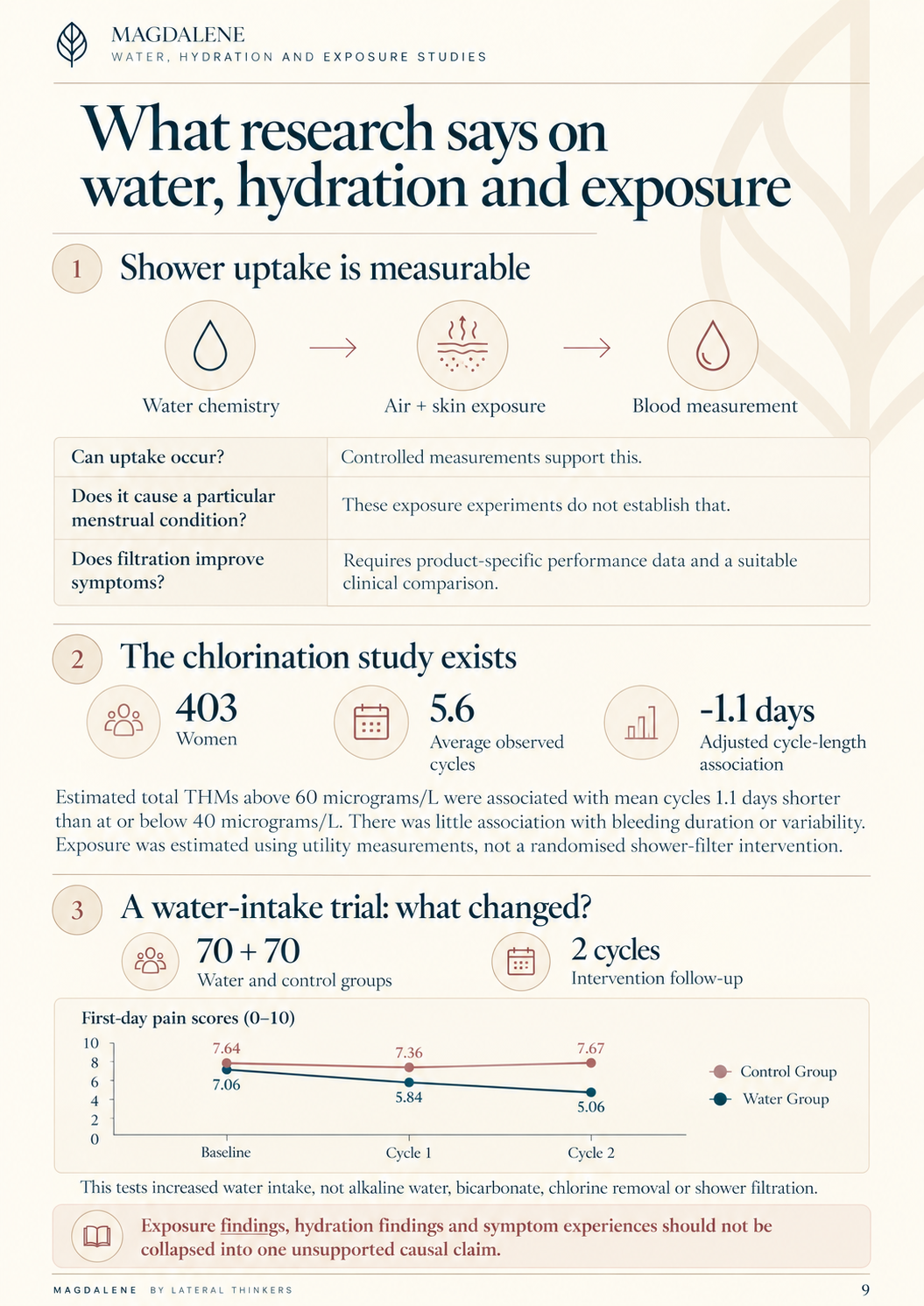
[03]Windham GC et al. (2003). Chlorination by-products in drinking water and menstrual cycle function. Environ Health Perspect 111:935-941. DOI: 10.1289/ehp.5922.Open source
[04]Exogenous and Endogenous Determinants of Blood Trihalomethane Levels after Showering (2008). Controlled exposure study.Open source
[05]The influence of physicochemical properties on the internal dose of trihalomethanes in humans following a controlled showering exposure (2012).Open source
[06]The role of water intake in the severity of pain and menstrual distress among females suffering from primary dysmenorrhea: a semi-experimental study (2021). Preliminary intervention evidence.Open source
[08]Fenton TR, Huang T (2016). Systematic review of the association between dietary acid load, alkaline water and cancer. BMJ Open 6:e010438. DOI: 10.1136/bmjopen-2015-010438.Open source
[09]International Society of Sports Nutrition position stand: sodium bicarbonate and exercise performance (2021). DOI: 10.1186/s12970-021-00458-w.Open source
[11]Estruch R et al. (2018). Primary Prevention of Cardiovascular Disease with a Mediterranean Diet Supplemented with Extra-Virgin Olive Oil or Nuts. Revised PREDIMED report. NEJM 378:e34. DOI: 10.1056/NEJMoa1800389.Open source
[13]Exposure to Drinking Water Trihalomethanes and Risk of Cancer: A Systematic Review of the Epidemiologic Evidence and Dose-Response Meta-Analysis (2025). DOI: 10.1289/EHP14505. Observational exposure evidence.Open source
[16]Palmer MJ et al. (2025). The Burden of Poor Reproductive Health in England. BJOG. DOI: 10.1111/1471-0528.18133. Age-weighted online convenience survey; not a UK age-12+ census.Open source
[22]Liu XY et al. (2024; online 2023). Urinary biomarkers of drinking-water disinfection byproducts in relation to diminished ovarian reserve risk. DOI: 10.1016/j.scitotenv.2023.168729.Open source
[23]Exposure to disinfection by-products and risk of diminished ovarian reserve: Case-control evidence and cellular metabolomic insights (2025). DOI: 10.1016/j.reprotox.2025.108901. Bibliographic/abstract verification; full text not obtained.Open source
[37]Jang D et al. (2025). Menstrual cycle effects on cognitive performance: a meta-analysis. DOI 10.1371/journal.pone.0318576.Open source
[38]Prasad D et al. (2021). Suicidal risk in PMS/PMDD: systematic review and meta-analysis. DOI 10.1089/jwh.2021.0185.Open source
[39]Suicidality in patients with PMDD: systematic review and meta-analysis (2021). Different estimates.Open source
[40]Dos’Santos T et al. (2023). Menstrual phase and ACL injury-risk surrogates: systematic review. DOI 10.1371/journal.pone.0280800.Open source
[42]Schoep ME et al. (2019). Productivity loss: Dutch survey of 32,748 women. DOI 10.1136/bmjopen-2018-026186.Open source
[46]Reilly et al. (2024). PMDD prevalence review. DOI 10.1016/j.jad.2024.01.066. Confirmed community estimate 1.6%.Open source
[47]Dietary acid load in health and disease (2024). DOI 10.1007/s00424-024-02910-7.Open source
[48]EPIC-Norfolk: urine pH as an indicator of dietary acid-base load (2008).Open source
Survey / policy / public research reporting
[17]LSHTM (2025). Population application of the reproductive-health survey: more than 10 million in England, encompassing multiple reproductive outcomes.Open source
[20]House of Commons Women and Equalities Committee (2026). Menstrual health of girls and young women.Open source
[21]Wellbeing of Women. December 2023 girls survey executive summary. UK ages 12-18; self-reported impacts.Open source
[32]CIPD (2023). Menstruation and support at work. UK survey.Open source
[33]Endometriosis UK (2 March 2026). Diagnosis report findings: 9 years 4 months.Open source
[34]Wellbeing of Women. Just a Period: surveys from August/December 2023 and February 2025. Do not merge populations.Open source
[41]ActionAid UK (2026). Poll: 11% struggled to afford period products.Open source
Advertising / data protection / other
[14]ASA/CAP. Weight control: Testimonials; Food and Food Supplements. Advertising rules differ by product category.Open source
[15]Information Commissioner's Office. Special category data and valid consent. Article 6 and Article 9 requirements.Open source
[49]Primary Christian texts: Luke 8:1-3 and John 20:11-18, USCCB. The spiritual framing is contemporary inspiration.Open source